
Retail investors are piling into ETFs, managed funds, and alternatives. But asset managers have a problem: they can’t make their products stand out. To the average investor, an MSCI World tracker from iShares, Vanguard, or Morgan Stanley can look interchangeable – because, well, they mostly are.
Here, we share our unique retail investor insights through the lens of that challenge and explore why asset managers need to engage them earlier in their investment journey.
Investors begin to make decisions way before they reach a platform
To make an investment decision, modern retail investors start with the news and the questions it triggers. Then go looking for answers, drawing on multiple sources. In fact, 31% of retail investors use more than three sources for investment information.
Social media isn’t as big a factor as people think either and fewer than 10% of first-time investors say social media triggered their first investment. Across the Finimize community, 42% say they now use social media significantly less than they used to for investment advice.
Friends and family are far more influential. 46% of first-time investors entered the market after speaking with someone who already invests.
Why this matters for asset managers:
We know that retail investors engage with 10–15 touchpoints before choosing an investment. To influence that decision, asset managers need to show up consistently across the journey with an omnichannel approach.
Investors are not loyal to one platform (and they're not satisfied)
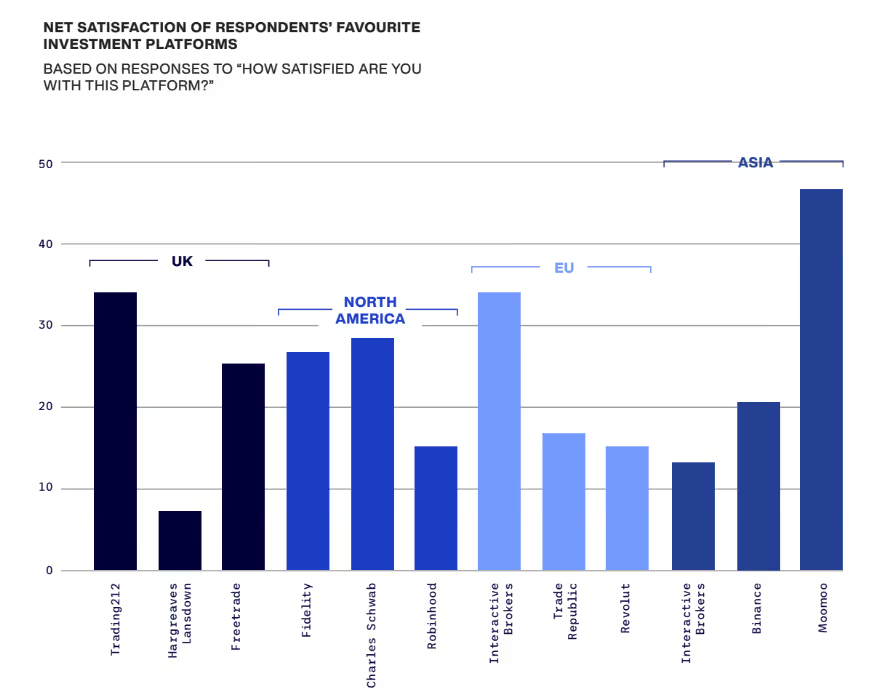
When we asked, retail investors in the Finimize community named more than 100 different favorite investment platforms.
That reflects a dissatisfaction with the options available. Even among the top three platforms in all regions we surveyed, the average satisfaction score was just 23 (on a –100 to +100 net satisfaction scale) with 16% of respondents rating their platform six or below.
Why this matters for asset managers:
Platform reach isn’t the same as brand preference. If investors are spread across dozens of brokers – and aren’t especially attached to any of them – anchoring growth to a single one is a fragile marketing strategy.
Investment activity grows steadily over time
When we dug into how much investors got started with, almost half (46%) of investors who had been investing for three or more years started with less than $500. Among those planning to invest more than $10,000 that year, over a third (36%) had also begun with under $500.
Why this matters for asset managers:
Firms that earn trust early are better positioned to grow alongside investors as they invest more.
There's no such thing as a typical retail investor
There is no typical retail investor, and lumping them together misses the point. They span a wide range of life stages, income profiles, and lived experience.
Look at something as reductive as age, for example: of the millions of folks that started investing during the pandemic, 66% of them were aged between 18 and 45. Within that range, you’ve got investors who have never lived in an iPhone-less world and investors who were born a year after the first Apple computer went on sale; investors who have seen interest rates over 14%, and some who have never seen them top 6% (in the UK, at least).
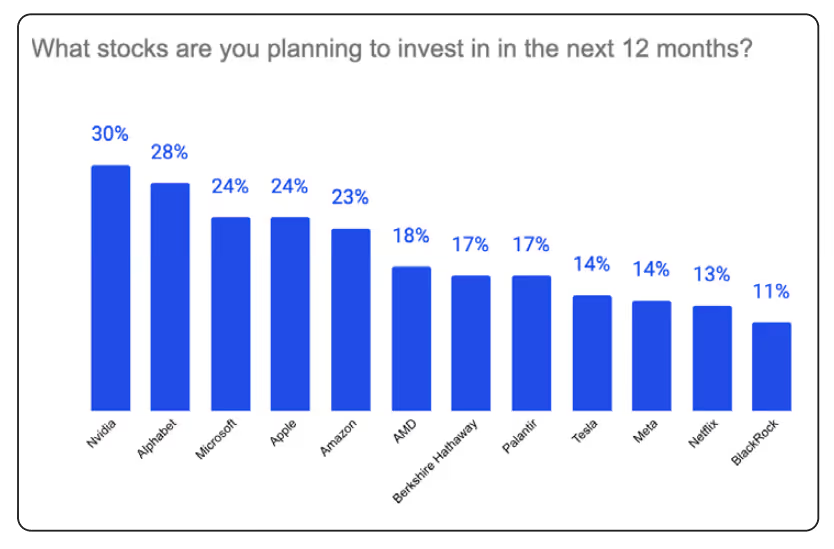
Plus, they adapt and evolve as they spend more time in the market. For example, 67% plan to invest in stocks over the next 6-12 months and 58% plan to invest in ETFs – but we know that from there, paths diverge and patterns emerge that you can’t see from broad demographic trends.
Drilling into the data on the content retail investors consume is a more accurate predictor of what they will do next, which also helps with targeted promotions and advertising, and for building future content journeys.
Take our Advanced Investor series. Of everyone who studied picking stocks, for example, 15% went on to learn about valuing stocks. From there, 16% read or listened to our guide on analyzing financial statements. Or of those that engaged with our robo-advisor guide, 65% went onto explore ETFs, and then 58% moved onto portfolio construction guides.
Why this matters for asset managers:
Simple demographic targeting just won’t work. Asset managers need to look at investment behavior and content consumption to figure how to promote their products most effectively. Firms must understand how investors are maturing, and stay relevant and visible at these inflection points.
The new retail playbook
Currently, when modern retail investors discover asset managers, it’s usually on a crowded shelf and across dozens of platforms. That makes it risky to rely on any single distributor to build a durable relationship.
Many of the asset managers we speak to have defaulted to paid social ads and broad awareness campaigns – those channels are typically low intent and low trust.
The solution is building brand loyalty with high-intent content and influencing at the point where investment decisions are actually made, in trusted educational content, specialist investor media, and through investor communities and events.
This is something we can help you with. Get in touch to find out more.
Grow your business
with Finimize
Our Partners