%20(1).png)
A Finimize guide to turning cash-rich, investment-shy customers into confident, lasting investors
Introduction
Ten million UK savers say they’re ready to invest, but haven’t.
In fact, UK individual share ownership has fallen from 54% in 1963 to just 11.6% today. Outside pensions, UK adults hold only 8% of their wealth in equities and mutual funds. That’s the lowest share in the G7, and well behind the US’s 33%. However you slice it, the UK has become a nation of savers, not investors.
Fortunately, that’s exactly what a new wave of regulation is trying to fix. Targeted Support, the Leeds Reforms, and a run of related initiatives now give UK banks and investment platforms the regulatory permission and industry pressure to nudge cash-saving customers towards investing.
This creates a huge and very real opportunity: around 15 million UK adults are sitting on more than £610bn or more in “excess” cash. Of those, 10.1 million say they’re open to investing but haven’t pulled the trigger. This is one of the largest addressable audiences in UK retail finance, sitting in existing products.
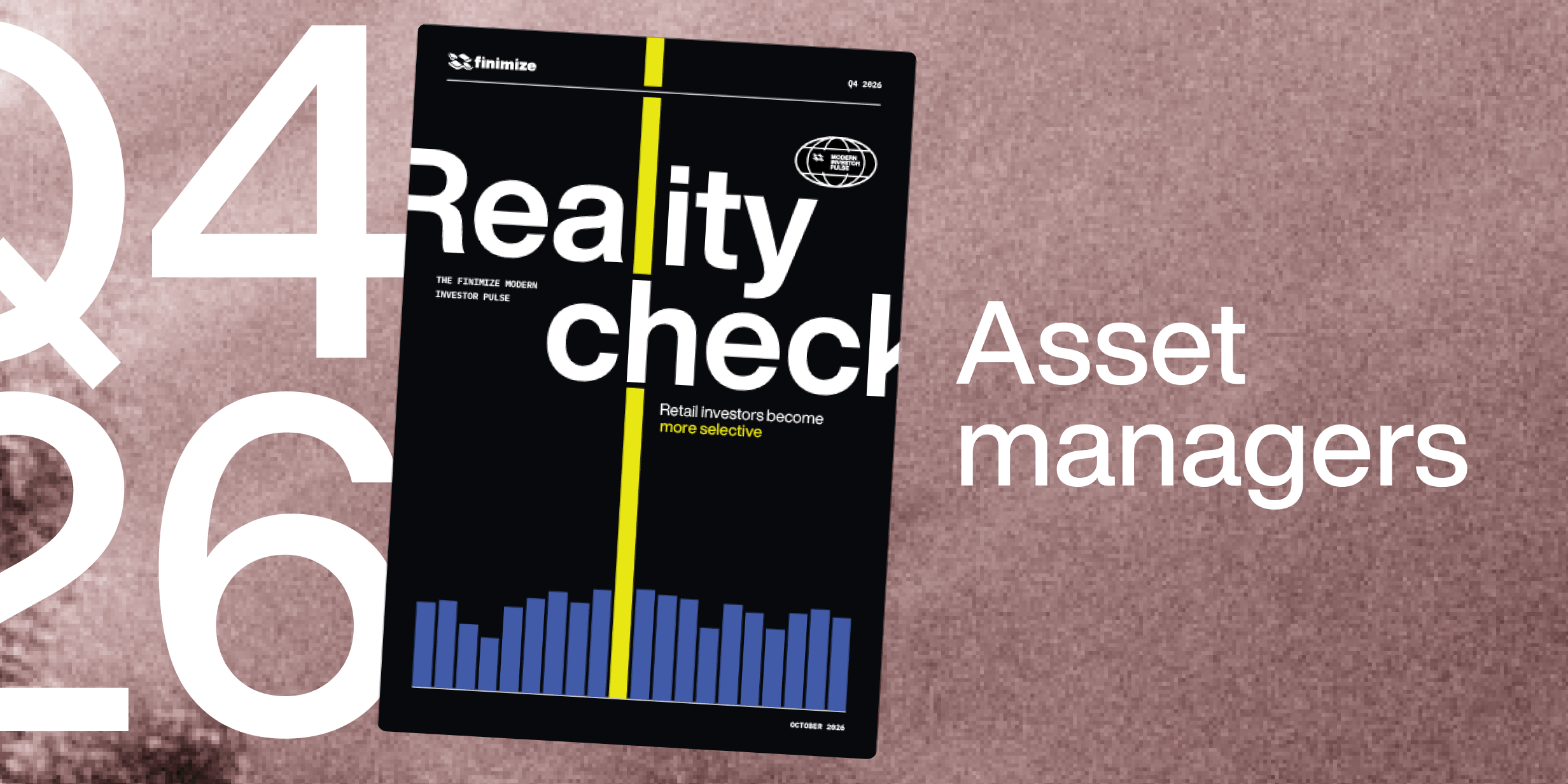
This guide draws on our own community of over a million retail investors built over the past decade, backed up by proprietary research – including our quarterly Modern Investor Pulse – into how these savers actually think and behave.
The blocker is content and confidence, not product or regulation. Building that in-house from scratch is a huge undertaking, and sending your customers off to a third-party resource means handing over the relationship entirely. The simpler route is licensing sequenced, distribution-ready content from a specialist who already reaches this audience, at the pace firms need.
This is exactly what Finimize already does today through Select, which includes a ready-built saver-to-investor curriculum plus news, insights and education to keep investors engaged as they continue their investing journey (skip to Section 5 to read about that in full).
1: Regulation has cleared the way
UK financial institutions now have the permission, pressure, and fiscal incentive to move cash savers into investing, with five encouraging initiatives arriving within the same few months.
Leeds Reforms
Announced 15 July 2025 as part of a package to rewire the UK financial system and close the UK’s investment gap versus G7 peers.
Targeted Support
FCA rules, live 6 April 2026, let firms proactively suggest investing to specific customer segments without full regulated advice.
Risk Warnings Review
Moves firms away from standardised “capital at risk” boilerplate towards plain, balanced, consumer-tested risk/reward explanations.
Invest for the Future
A coalition of 20 firms, including Barclays, Aviva, and JP Morgan, plus Treasury, the FCA and the IA, fronted by the Savvy the Squirrel mascot, launched at the end of April 2026, with an explicit goal of converting the 10.1 million hesitant saver cohort.
The Cash ISA allowance cut
A government initiative to nudge savers towards equities by slashing the tax-free Cash ISA allowance from £20,000 to £12,000 for under-65s, while the Stocks and Shares ISA allowance stays at £20,000.
The Invest for the Future campaign is already tackling the first phase: broad, mass-market awareness that investing is an option at all. But awareness isn’t the same as action. Once someone knows investing exists, they still have to work out whether it’s for them, compare providers and products, and decide who to trust. And none of the five initiatives above give firms a working system for producing the ongoing, plain-language, stage-matched educational content that turns that awareness into action.
2. Why 10m+ willing savers haven’t made the move
The trust and conversion gap
For many UK savers, investing feels both unfamiliar and intimidating. In research commissioned by the FCA via Opinium in April 2026, 74% describe it as “a big step”, while Barclays' 2026 Investment Readiness Index finds that only 14% agree that investing is “for people like me”. Yet the appetite is there: our data shows that 74% of retail investors say they’d invest more if they had more opportunities to learn about investing, but only 20% say their existing platform gives them enough information to make investment decisions.
Savers who do eventually cross over can’t get lost time back, with roughly three-quarters of current investors saying they wish they’d started sooner. To ensure hesitant savers don’t suffer those regrets in future, firms must act now to become the trusted voice with whom customers can have these important conversations.
Risk aversion
Perception of risk, not risk itself, is doing most of the damage. Sixty percent of UK savers avoid investing because they think it’s too risky, 51% don’t realise cash savings can lose real value to inflation, and 72% say standard “Capital at risk” disclaimers put them off investing altogether.
Risk Warnings Review research cited in the ISA Barometer 2026 found that 38% of savers and investors thought they could lose everything, and 59% came away with the overall message that investing is risky.
The thing is, perceptions are fixable. When Vanguard rewrote its risk warnings in plain English, savers shown the plain-language version felt more confident (54% vs 44%), were more likely to say they’d invest (51% vs 40%), and dropped out of the ISA onboarding 23% less often. A separate test using plain-English fund descriptions lifted investment intent by 133% overall, and 145% among women.
In fact, Vanguard reported a 25% uplift in conversion after rewriting how it explained risk with more context and balance. “We overstate the investment market risk, we understate the inflationary risk,” summarised Ben Summers, Head of Vanguard UK. “People don’t invest enough as a result.”
The lesson isn’t to fix one disclaimer. It’s that plain, jargon-free content moves people from alarmed to confident wherever it shows up, which is precisely the kind of content firms need built into every touchpoint – not just the risk warning.
The savings threshold illusion
The 2026 ISA Barometer asked Cash ISA savers who say they’re open to investing how much they’d need saved before they’d feel ready to start. In 2025, the average number was £73,406; in 2026, it jumped to £94,706 – a 29% rise.
These figures don’t reflect reality. Investment platforms allow people to open Stocks and Shares ISAs with as little as £1, and 41% of current investors started with less than £500. The fix is confidence, not more savings.
Part of the problem is that saving and investing get treated as two different products – saving is “safe”, investing is “risky”. Vanguard’s research shows that 81% of UK savers see saving and investing as fundamentally different activities. Content that reframes investing as a continuation of saving tackles that at the root.
The generational confidence gap
Blockers show up differently and more severely at certain life stages. Over-55s are almost three times more likely than under-25s to feel investing isn’t for someone like them, and Gen X is the least confident generation despite having the most decades of investing runway ahead of them. Decant Index research shows that 11.7% of UK adults aged 60-80 avoid investing due to financial risk – nearly double the rate of 50-59-year-olds.
One generic message can’t address all of those dynamics. What works is content tailored to where each person is in their journey.
The trusted conversation catalyst
Content alone rarely tips someone over. In our latest Modern Investor Pulse, nearly 40% of investors say a conversation with someone who invests – a friend, family member or colleague – was the catalyst that got them started. The implication for firms isn’t just to publish more content: it’s to create more opportunities for those conversations to happen in the first place.
The “never investors”
Not every non-investor is on the fence, ready to be converted. The ISA Barometer 2026 found 49% of surveyed Cash ISA savers say no amount would make them comfortable investing, up from 39% in 2025.
The FCA’s Financial Lives Survey backs this up, showing that 61% of adults holding £10,000 or more in investable assets keep at least three-quarters of it in cash, and 54% of non-advised adults with cash savings and no investments say they haven’t considered investing because of fear of losing money or a lack of knowledge, support, or feeling overwhelmed by options.
This segment matters because it shows firms where to focus. The opportunity is the roughly 10 million savers on the fence, open to investing, but not yet moved. Firms get more from reaching that higher-intent group directly, with content matched to where they are, than from broadcasting the same message at everyone regardless of readiness.
Financial literacy and choice paralysis
Underneath all of this sits a literacy gap. Wealthify’s research with the Centre for Economics and Business Research (CEBR) found only 5% of Brits could correctly answer 10 questions on common financial topics. Without a baseline understanding of how investing works, savers default to whatever feels safest, even if it ends up costing them the most.
Mismatched goals and products
Nearly a third of savers are using Cash ISAs to fund retirement, a long-term goal that is better suited to investing than cash. In fact, among Stocks and Shares ISA holders, retirement is the top use case, which shows that once someone does cross into investing, they can goal-match correctly.
3. What actually works: journey-matched content, delivered where the customer already is
Access, choice, and tax wrappers already exist – confidence, trusted framing, and content matched to people’s specific psychological barriers often don’t.
At Finimize, we already do this for 1.2 million retail investors, and have partnered with 300+ financial brands to bring the same approach to their own products. Our content gets 70% more engagement than other retail-focused financial platforms, and 90% of our community say they’ve learned something concrete from it.
This is what firms need to build or license to follow suit:
Design for push, not pull.
Assume the customer won’t come looking. Sequence content out to app home, onboarding, email/CRM nurture and Targeted Support nudges, matched to where they are in the journey. Retail investors typically need 10-15 touchpoints before they convert, so one piece of content won’t achieve much alone.
Make the hub secondary, not central.
A branded content library makes a good home base for pushed content to link back to, but it should never be the first or only move.
Match content to engagement stage.
One size does not fit all. A cold, disengaged saver and someone who’s already decided to invest need different content. We segment our own community this way, from first-time investors to those with 10+ years’ experience, and via our Modern Investor Pulse research, we can track how needs shift by stage.
Use varied and native formats.
Long-form guides alone underperform. The same idea should exist as a short daily-style insight, a single-screen card, a plain-text data point, an illustrative scenario, and a newsletter block – whichever suits the surface. We adapt the same insight to different formats, rather than repurposing one format everywhere.
Keep it in the firm’s own voice and product.
Sending customers to a third-party resource – however good – hands the opportunity, brand, and trust to someone else. Our content licensing model is built for co-branded content that lives inside the firm’s own app or emails (not a link out to Finimize itself).
Don’t stop at the first investment.
Most firms’ content ends at “how to get started”, and so does most vendors’: many stop there entirely, or hand off to a generic wire feed built for institutional investors. But the job doesn’t end when the individual has taken the plunge. The highest-value, most overlooked stage is helping the customer hold their nerve through volatility and keep contributing, since that’s where firms actually see drop-off – and where those that get this wrong simply burn and churn the customers Targeted Support was meant to convert. Ongoing commitment to education, insight and support keeps investors engaged, long term.
Facilitate real conversations, not just content.
Content earns trust, but the trusted-conversation catalyst above shows it isn’t the whole answer. Events, webinars and community discussions where savers can talk to real investors do something written content alone can't. They sit alongside a firm's content, not instead of it.
4. The compliance advantage
Targeted Support sits close to the advice boundary, so content must be demonstrably educational – no straying into personal recommendations – and the Risk Warnings Review demands plain, consumer-tested language. That means writing, testing and refining language with real consumers before it goes live – a process most in-house editorial teams don’t have the time, tools, or specialist expertise to run themselves.
If a specialist partner builds its content with those boundaries in mind from day one, rather than a firm building in-house and hoping it holds up under scrutiny, buying that expertise actively reduces compliance risk. That reframes compliance from an obstacle the sales conversation has to get past into a genuine selling point.
But permission to nudge doesn't solve the harder risk of content tipping over from education into something that functions as personal advice. No regulation can – that risk comes down entirely to how the content is written.
5: Closing the gap
Select is Finimize’s content licensing solution, built for platforms and banks bringing savers into investing, or running Targeted Support journeys and onboarding, who need sequenced educational content to power those nudges while staying the right side of the advice boundary.
Select offers a structured journey, not a content dump: a cautious saver doesn’t need more articles; they need to be walked from fear to a first action, then kept invested.
The six-module saver-to-investor curriculum: We’ve designed a specific series to help firms take investors on this vital journey: What is investing; Why should I invest; Should I be saving more or investing; I want to invest, but where; How to get started; Staying invested. Each module is a set of assets in multiple formats, configurable and co-brandable, so it plugs into onboarding, the app, email nurture and Targeted Support comms in the firm’s own tone, with stage-aware delivery: a cold saver sees different content to someone nearly ready to invest.
Staying invested is where the real differentiation sits. Most saver-to-investor content stops at “how to get started”. The sixth module in our curriculum – Staying Invested – picks up from there, to help customers hold their nerve through volatility and keep contributing. After all, firms risk burning through a generation of new savers if they don’t. One US study tracking 653,455 brokerage accounts found that 30.9% of investors who panic-sold during a downturn never returned to risky assets at all.
Built to keep working, not just launch once. The six-module journey is the starting point, and it’s backed by an editorial team producing more than 1,000 pieces of investment content every week, so firms can carry on serving and engaging customers long after their first investment, rather than the relationship ending when the initial build goes live.
Content that carries real editorial weight. Every piece is researched by analysts who have worked at the likes of Fidelity, Goldman Sachs, Schroders and Credit Suisse, and edited by award-winning journalists from titles including The Guardian, New Scientist, the Wall Street Journal and the Associated Press. It’s written specifically for retail investors, and because it’s independent editorial rather than owned content, there’s no regulatory conflict or awkward proximity to a firm’s own products.
A strategy, not a feed. Firms set their objectives, and our experts recommend the right mix of fixed-journey and ongoing content to meet them, feeding into a personalized dashboard within Select. And for firms wanting to actively reach new higher-intent savers beyond those already in their base, that’s what Finimize Promote is for: putting your thinking in front of 1.2 million active investors at the moment they're working out what to own.
Grow your business
with Finimize
Our Partners



Case study: The saver-to-investor content journey
A leading UK personal finance brand launched a new investing service for a customer base that was mostly savers, many with no investing experience and no clear route into it.
The brief: Provide the educational content and support to get beginner investors from saving into investing, map it to the brand’s own platform, products and tone of voice, and structure it as modules, so customers learn in the right order, and keep learning after their first investment.
The solution: Finimize produced a content strategy of modules mapped to their platform, products and customer segments: a full long-form article for every topic, starting with saving-to-investing; condensed versions of the same topics cut down for email, app and in-product use; and a licensed library giving ongoing access to Finimize content once the custom build was live. Its compliance team was involved throughout production, and everything was supplied in ready-to-deploy formats, so its own team could publish without rework.
The launch: Phase 1 content is live. Early content and user testing results are positive, further modules are rolling out now, and content strategy keeps developing alongside the product.
Talk to us about building a content journey for your customers. Book a call with the Finimize team.